
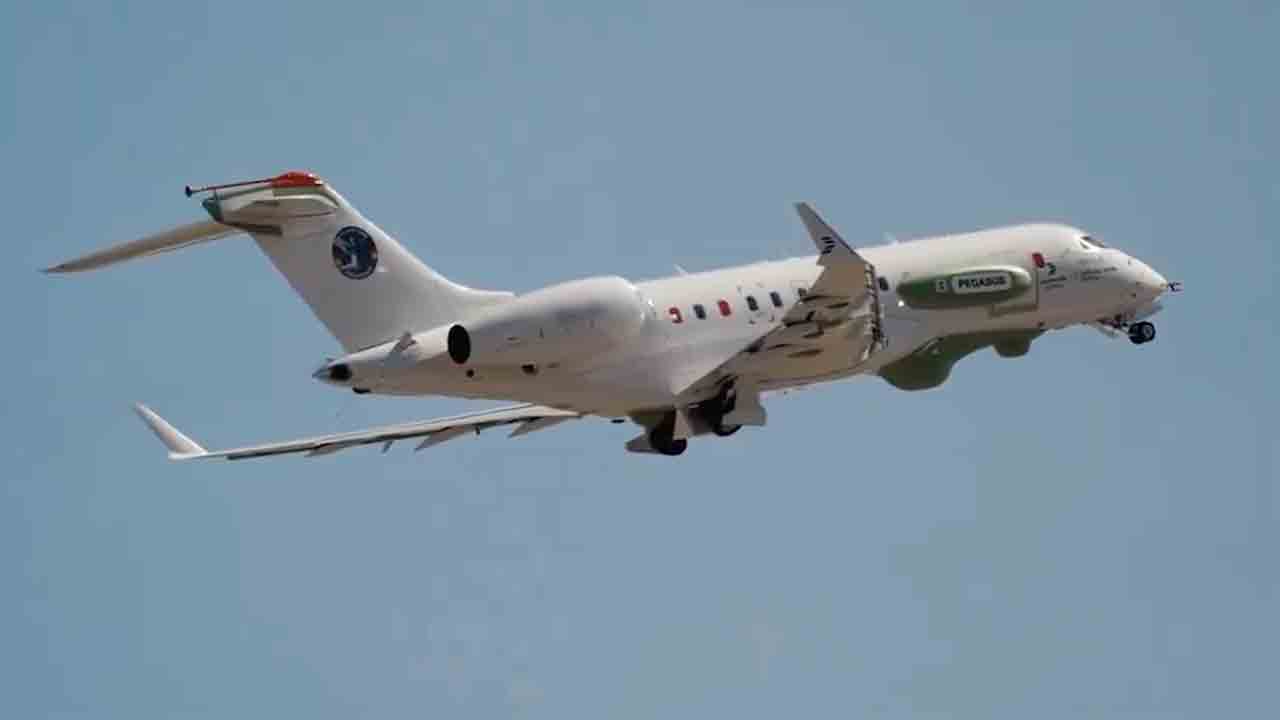
The German Air Force has officially begun operating the PEGASUS (Persistent German Airborne Surveillance System) radio reconnaissance system, now serving as the country’s new “eyes and ears” in the field of military intelligence. The announcement was made by manufacturer Hensoldt AG.
Developed through a strategic partnership between Hensoldt, Lufthansa Technik Defense, and Bombardier Defense, PEGASUS is based on the Bombardier Global 6000 business jet, converted from a Bombardier BD-700 Global Express in the German fleet (registration D-APEG), previously used for VIP transport.
The aircraft incorporates Hensoldt’s Kalaetron Integral, a technological core that combines in a modular solution the functions of electronic intelligence (SIGINT), electronic support measures (ESM), and electronic signals intelligence (ELINT). It is a software-defined ISR (Intelligence, Surveillance, Reconnaissance) platform capable of operating across the full spectrum of electromagnetic threats.
+ Video: Watch the maiden flight of PEGASUS

With an operational ceiling above 15,000 meters and a range exceeding 11,000 kilometres, PEGASUS can remain on patrol for many hours while staying out of reach of most ground-based air defence systems. The system is also integrated into NATO’s joint intelligence architecture, enhancing the effectiveness of other assets — from fighter jets to drones.
This is Germany’s first dedicated SIGINT aircraft since 2013, when the Euro Hawk programme was cancelled. The entry into service of PEGASUS reduces reliance on allied capabilities and marks Germany’s return to independent airborne reconnaissance operations after more than a decade.
+ KNDS unveils second prototype of Leopard 2A-RC 3.0, next-generation tank with unmanned turret

Source and images: Hensoldt AG | X @hensoldt. This content was created with the help of AI and reviewed by the editorial team.
